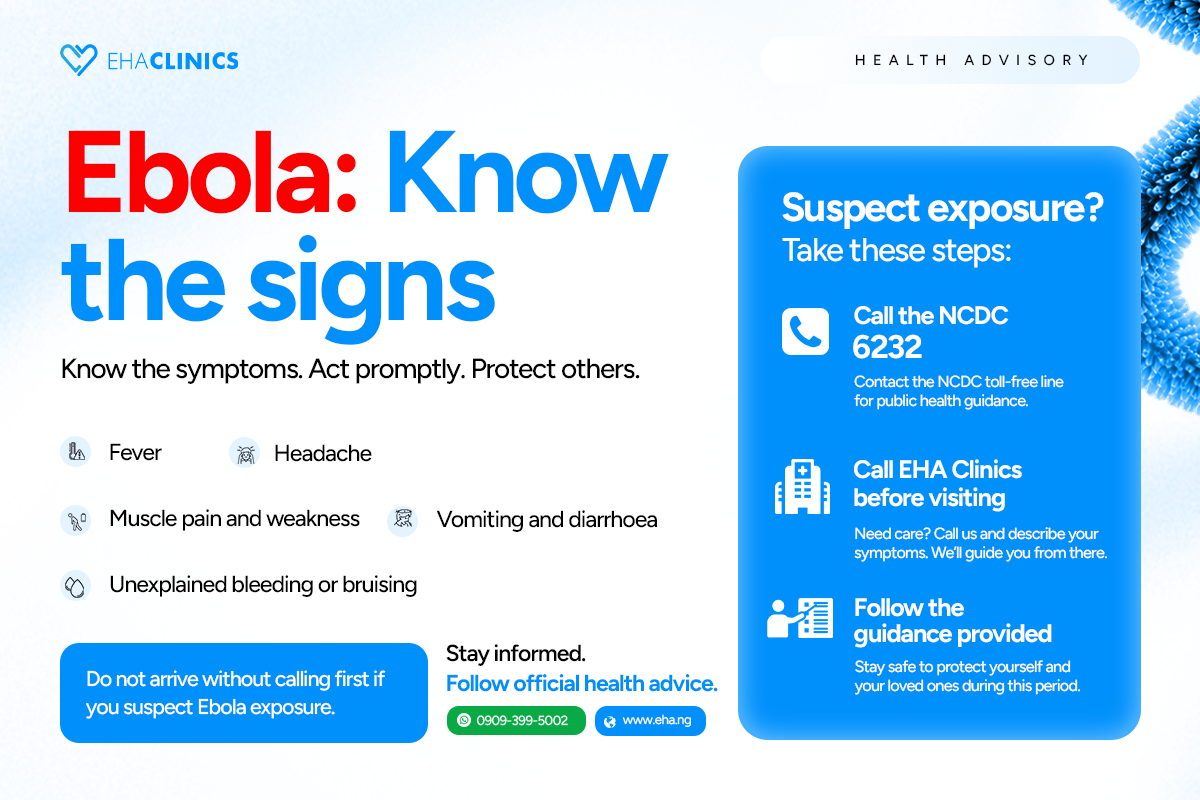
Following confirmation of an Ebola case in Abuja, Federal Capital Territory (FCT), on 19 October 2026, it is important for Nigerians to understand the symptoms of Ebola, how the disease spreads, and what to do if exposure is suspected.
Ebola is a serious infectious disease, but understanding how it spreads, recognizing possible symptoms, and following public health guidance can reduce the risk of transmission.
If you suspect you have been exposed to Ebola, call the NCDC toll-free line on 6232 for guidance. If you need care at EHA Clinics, call the clinic before visiting and follow the instructions provided.
What is Ebola?
Ebola disease is a serious illness caused by viruses in the Orthoebolavirus genus. The current outbreak associated with the case reported in Nigeria involves the Bundibugyo virus.
Ebola can cause severe illness and requires prompt medical assessment and appropriate supportive care. Public health authorities coordinate outbreak investigations, contact tracing, and infection prevention measures to limit transmission.
A reported case does not mean that everyone in the affected city or country has been exposed. Understanding how transmission occurs and following official advice are important steps in protecting yourself and others.
What are the symptoms of Ebola?
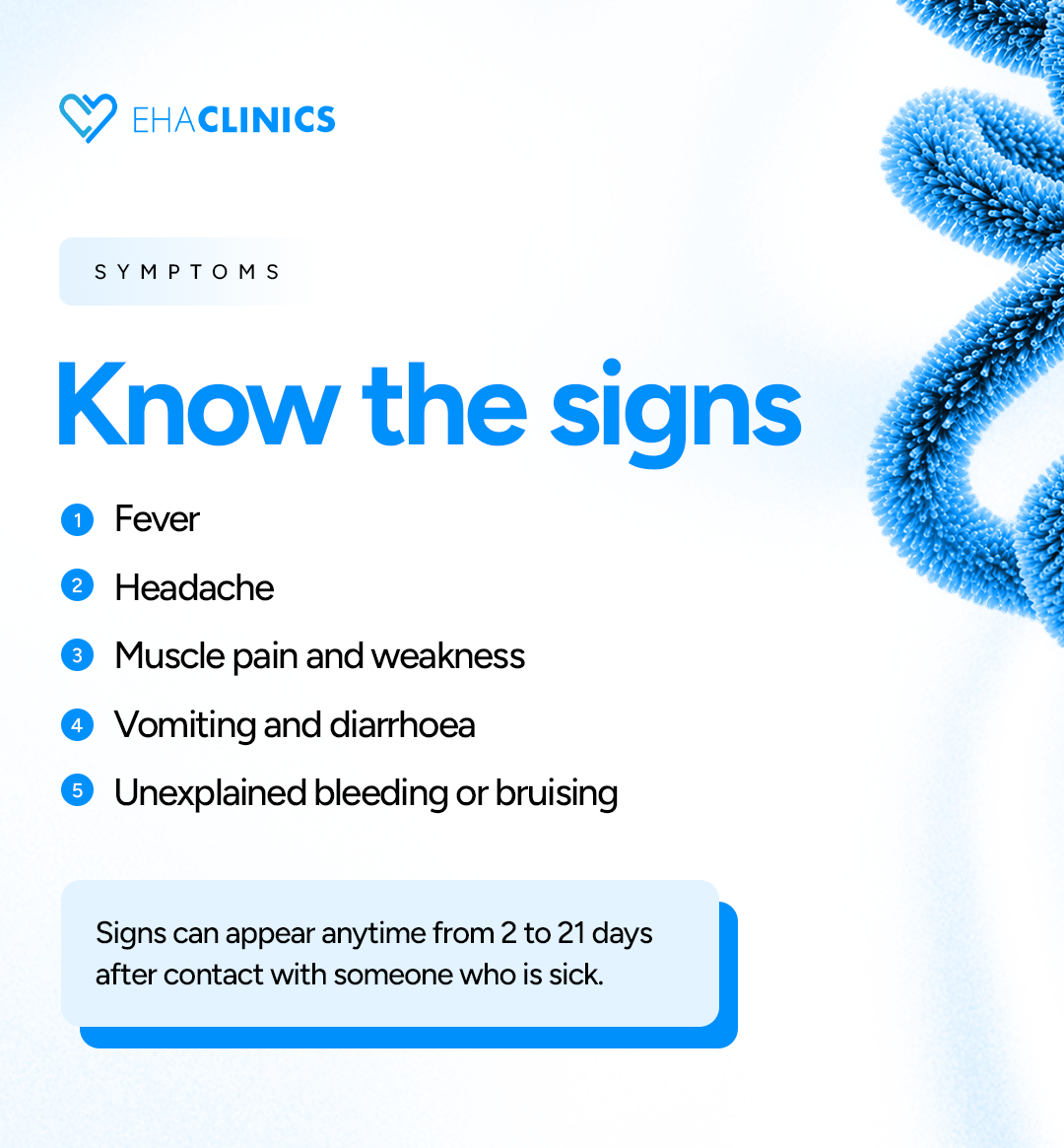
Ebola symptoms usually develop between 2 and 21 days after exposure.
Early symptoms may include:
- Fever
- Headache
- Muscle pain
- Weakness and fatigue
- Sore throat
Other symptoms may include:
- Vomiting
- Diarrhoea
- Abdominal pain
- Rash
- Unexplained bleeding or bruising in some cases
Can Ebola symptoms be mistaken for malaria?
Yes. Early Ebola symptoms can resemble those of malaria, typhoid, and other infections. Symptoms alone cannot confirm Ebola, and a person should not attempt to diagnose the disease themselves.
If you develop compatible symptoms following possible exposure, contact public health authorities promptly for guidance.
How does Ebola spread?
Ebola spreads through direct contact with the blood or other body fluids of a person who is sick with Ebola or has died from the disease. Transmission can also occur through objects and surfaces contaminated with infected body fluids.
Infection can occur when the virus enters the body through broken skin or the eyes, nose, or mouth.
Ebola does not spread simply because someone lives in Abuja or another location where a case has been reported. The risk depends on whether a person has had contact that could expose them to the virus.
People infected with Ebola are not considered infectious before symptoms develop. Anyone identified as a contact should follow the monitoring instructions provided by public health authorities.
How can you prevent Ebola?
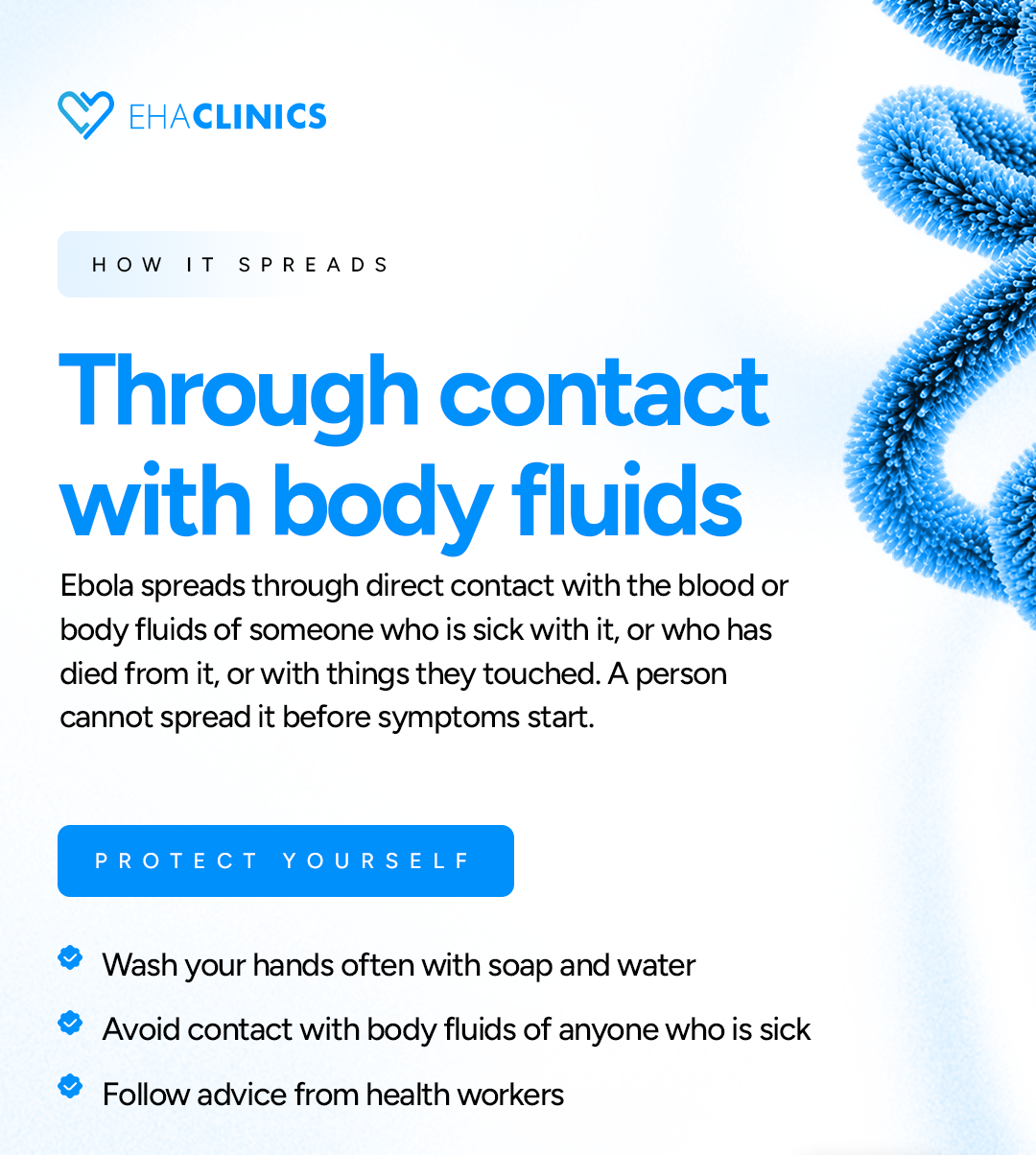
You can reduce your risk by following practical precautions:
1. Wash your hands regularly. Use soap and water and maintain good hand hygiene.
2. Avoid contact with body fluids. Do not touch the blood or other body fluids of anyone suspected or confirmed to have Ebola.
3. Avoid potentially contaminated items. Do not handle objects that may have been contaminated with an infected person's body fluids.
4. Follow official public health guidance. Get updates from the Nigeria Centre for Disease Control and Prevention (NCDC) and the World Health Organization (WHO).
5. Cooperate with contact-tracing teams. If public health authorities contact you about a possible exposure, provide accurate information and follow their instructions.
Healthcare workers and caregivers must follow the appropriate infection prevention and control procedures.
What should you do if you suspect Ebola exposure?
If you believe you may have been exposed to Ebola or develop symptoms after possible exposure, take these steps.
Step 1: Call the NCDC.
Call the NCDC toll-free line on 6232 for public health guidance. Explain your possible exposure and any symptoms, and follow the instructions provided.
Step 2: Call EHA Clinics before visiting.
If you need medical care at EHA Clinics, call the clinic before coming in. Explain your symptoms and possible exposure so the team can guide you on the appropriate next steps.
Calling ahead helps the healthcare team advise you on how to access care safely.
Step 3: Follow the guidance you receive
Do not visit a clinic without first seeking guidance if you suspect Ebola exposure. Follow instructions from public health authorities and healthcare professionals, including any advice about referral or assessment.
Do not delay reporting a possible exposure while waiting for symptoms to worsen.
Ebola in Abuja and the FCT: What residents should know
Following confirmation of an Ebola case in the FCT, residents should rely on verified public health updates rather than rumours or unconfirmed social media reports.
A confirmed case does not mean that everyone in Abuja is infected or has been exposed. Risk depends on the nature of contact with an infected person or contaminated materials.
Residents should continue to follow official public health advice, practice good hygiene, and seek guidance if they believe they may have been exposed.
For current information, consult the NCDC website and the WHO Ebola disease information page.
How is EHA Clinics supporting patient safety?
EHA Clinics is reinforcing infection prevention and control practices and reviewing emergency response readiness across its locations.
Our preparedness efforts include reinforcing staff awareness of emergency escalation procedures, maintaining appropriate hygiene practices, using personal protective equipment in line with approved protocols, and following established clinical and referral procedures.
If you suspect Ebola exposure and need care at EHA Clinics, please call your clinic before visiting and follow the guidance provided.
Our priority remains providing quality, patient-centered healthcare while protecting patients, staff, and communities.
Frequently asked questions about Ebola
Is there an Ebola case in Nigeria?
Yes. As of 21 October 2026, Nigerian authorities have confirmed an Ebola case in the FCT. For subsequent developments, consult official updates from the NCDC and the Federal Ministry of Health and Social Welfare.
What are the first signs of Ebola?
Early symptoms may include fever, headache, muscle pain, weakness, and sore throat. These symptoms can also occur with other illnesses, so possible exposure history is important.
How long after exposure do Ebola symptoms appear?
Symptoms typically develop between 2 and 21 days after exposure.
Can Ebola spread through casual contact?
Ebola is not spread simply by being in the same city as an infected person. Transmission occurs through contact with infected blood or other body fluids, contaminated objects, and certain infected animals.
What number should I call if I suspect Ebola exposure in Nigeria?
Call the NCDC toll-free line on 6232 for public health guidance.
Should I visit EHA Clinics if I suspect Ebola exposure?
Call EHA Clinics before visiting and explain your possible exposure and symptoms. Follow the guidance provided to determine the appropriate next steps.
Where can I get reliable information about Ebola in Nigeria?
Visit the NCDC website or the WHO Ebola information page for reliable information and updates.
Stay informed. Stay safe.
Ebola awareness begins with accurate information and responsible action. Understand the symptoms, know how the disease spreads, practice good hygiene, and seek guidance promptly if exposure is suspected.
Avoid spreading rumours or stigmatizing affected individuals and communities. Share verified information and follow public health advice.
EHA Clinics remains committed to safe, quality, and patient-centred healthcare.
This article provides general health information and does not replace professional medical advice or official public health instructions.
Sources
- World Health Organization: Ebola disease fact sheet
- World Health Organization: Ebola questions and answers
- Nigeria Centre for Disease Control and Prevention
- NCDC contact information