
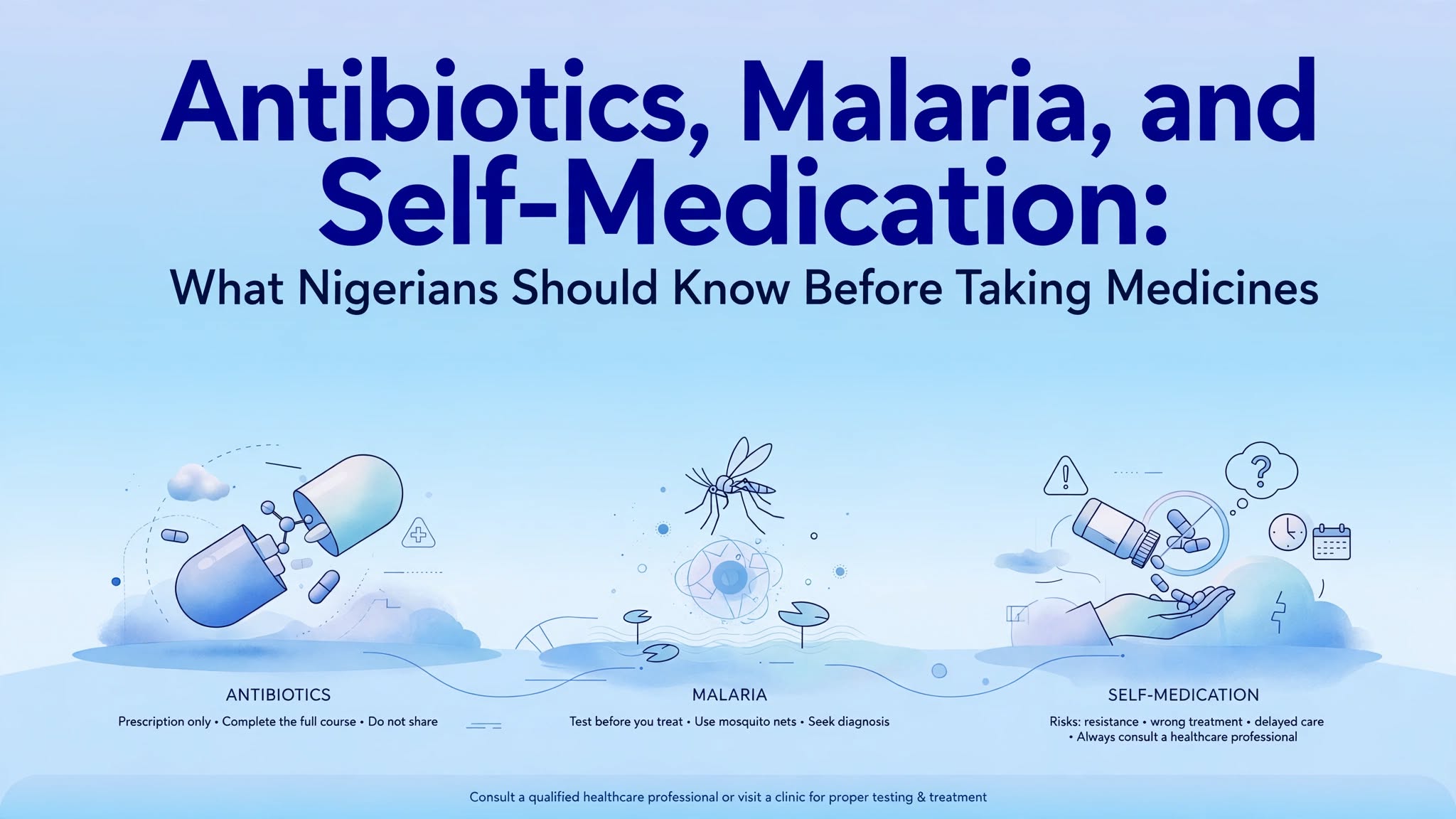
In many Nigerian homes, the first response to a fever, headache, or body weakness is often familiar: “It is malaria.” Someone may reach for an antimalarial drug left over from the last illness, buy antibiotics from a nearby chemist, or take a cocktail of over 3 intravenous antibiotics at once to energize and flush the body system of past, present, and even future infections. They may also take a medicine recommended by a friend. Sometimes, the symptoms improve, which reinforces the behavior. Other times, they persist or become worse.
It is easy to understand why people do this. Hospital visits cost money, busy schedules make appointments difficult, and many people have dealt with similar symptoms before. The problem is that similar symptoms do not always mean the same illness, and the right medicine depends on the cause.
As doctors, we want people to get the right treatment as early as possible. That starts with understanding a few important facts about malaria, antibiotics, and self-medication.
Not Every Fever Is Malaria
Malaria is common in Nigeria, so it is understandable that people think of it whenever they develop a fever. However, fever, headache, tiredness, chills, and body aches can also occur with other infections and medical conditions.
Taking an antimalarial drug without confirming the diagnosis may delay the treatment of the actual illness. This is why suspected malaria should be tested using a rapid diagnostic test and/or laboratory microscopy before treatment, where testing is available.
If your malaria test is negative, do not simply assume the test is wrong or buy another medicine. A healthcare professional can assess your symptoms and determine whether further investigation is needed.
The same caution applies to typhoid fever. Fever and weakness alone cannot confirm typhoid, and malaria and typhoid should not automatically be treated together, which is also a common practice by many Nigerians. Each condition requires appropriate assessment.
Antibiotics Do Not Treat Malaria
There is a huge misunderstanding about what antibiotics actually do. Many people take them for a runny nose, a cough, or a headache. Some even take antibiotics (Beecham brand of amoxicillin) to prevent pregnancy or cure a hangover.
Malaria is caused by a parasite, while antibiotics are used to treat certain bacterial infections. Antibiotics do not treat malaria, and they are not effective against viral illnesses such as the common cold or flu.
A common question frequently asked is, "Can someone have malaria and a bacterial infection at the same time?" Yes. When a clinician suspects both, additional assessment may be necessary, and an antibiotic may be appropriate. But taking antibiotics simply because you have a fever or because you believe malaria is severe is not good practice.
Every time you take an antibiotic improperly, the germs in your body watch and learn. They adapt to the drug. This is called antibiotic resistance. Over time, that drug stops working for you. If you get a severe infection later, standard medicines might fail. We are running out of effective antibiotics because we use them like candy.
Is Self-Medication Always a Bad Idea?
Go to a local vendor, and they might offer you a mix of various drugs. This cocktail often includes painkillers, malaria drugs, and antibiotics.
Buying and taking these cocktails of medications is risky. It can cause various organ-related damage. In fact, the expiry date or the actual dosage is rarely known. Adequate education and counseling on their appropriate use is usually never shared with customers when they buy them, which poses another significant danger to health. Stopping your medications the moment you feel a bit better is another major mistake. It leaves the strongest germs alive inside you. They will multiply, and the sickness will return much stronger.
People often self-medicate for various reasons. They may have used a particular medicine before that seemed to have worked, or received advice from a family member, or want to avoid the cost and inconvenience of a hospital visit.
It is, however, important to note that some medicines that are safe for one person may be unsuitable for another, particularly children, pregnant women, older adults, and people living with chronic conditions.
Five Things to Do Before Taking Medicine
Before starting treatment for a new illness, keep these practical steps in mind:
- Find out what may be causing your symptoms. Do not assume every fever is malaria. Seek an appropriate assessment and testing.
- Use antibiotics only when prescribed by a qualified healthcare professional. Do not buy them simply because you have a fever or because they helped during a previous illness.
- Follow the prescription carefully. Take the correct dose at the recommended times and for the prescribed duration. If you develop side effects or have concerns about your treatment, contact your healthcare professional rather than changing it on your own.
- Do not share medicines or reuse leftover antibiotics. A medicine prescribed for someone else, or for a previous illness, may not be suitable for you now.
- Seek care promptly if symptoms persist or worsen. Difficulty breathing, confusion, seizures, severe weakness, inability to drink, or repeated vomiting require urgent medical attention. Do not wait for self-treatment to work when serious symptoms develop.
Making Safer Choices for Yourself and Your Family
Responsible medicine use is not about making people afraid of medicines or blaming anyone for previous choices. It is about helping people understand when a medicine is appropriate or harmful and when professional assessment is necessary.
As healthcare professionals, we also have a responsibility to make good advice accessible. One practical approach is to clearly explain patients' diagnoses and treatment to help patients understand why a particular treatment is recommended.
So the next time you or a family member develops a fever, pause before reaching for an antimalarial or antibiotic. Ask what might be causing the symptoms, whether a test is needed, and which treatment is appropriate. That small decision can help you recover safely, avoid unnecessary costs, reduce the risk of adverse harm, and protect body organs from damagThe goal is not simply to take medicine. It is to take the right medicine, for the right reason, at the right time.
By
Dr. David Ashem Shaibu, MBBS, MBA, FISQua, LSSGB, FBDFM
Practice and Quality Assurance Manager, EHA Clinics Nigeria
